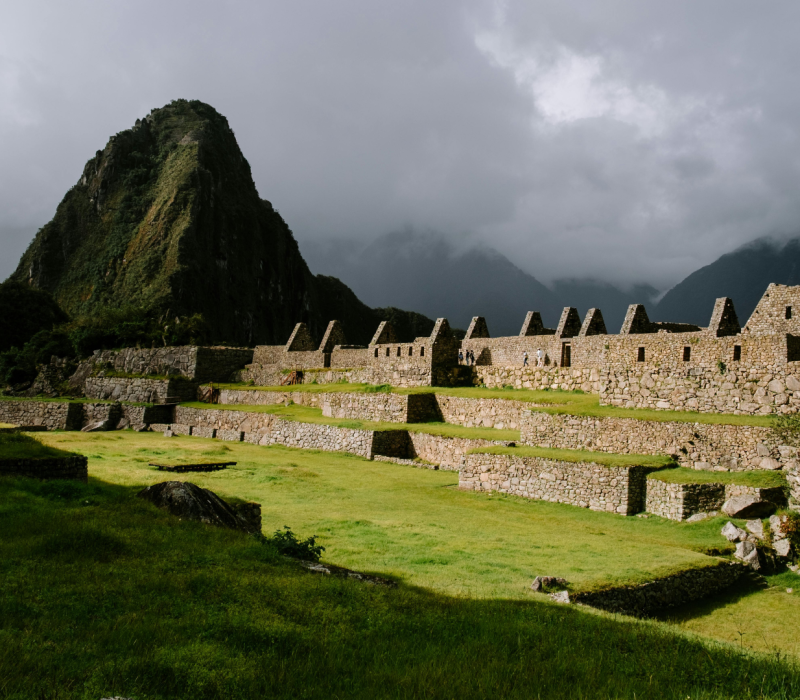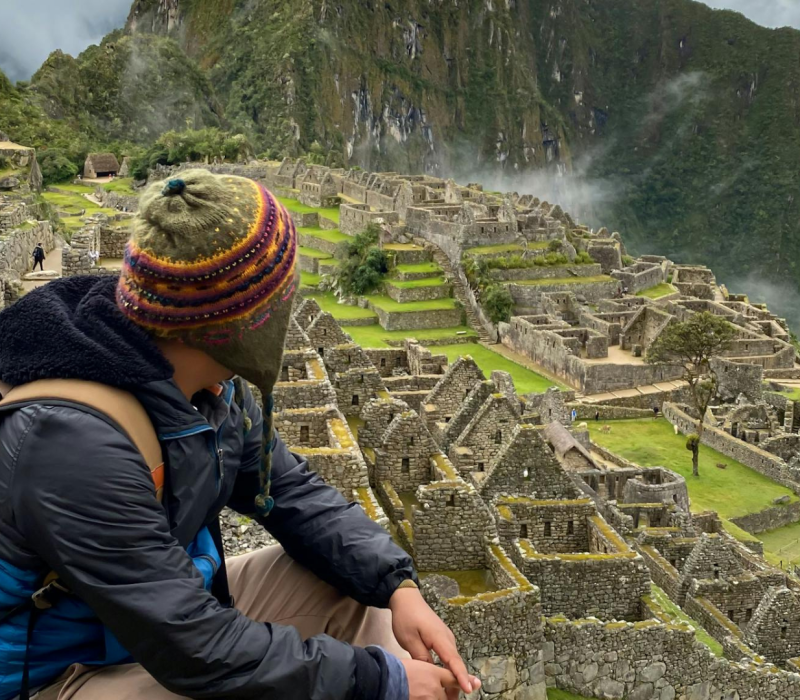


The Sacred Valley of the Incas is one of the most important territories in the Andean world and, however, it is usually traveled in a hurry. Located between Cusco and Machu Picchu, this valley was the agricultural, spiritual, and political heart of the Inca Empire. Today, it concentrates unique archaeological sites, living villages, and landscapes that explain why this region was considered sacred.
Understanding what is in the Sacred Valley and how to travel it with time completely changes the experience of traveling to Peru. In this article, we will look at some reasons to visit this amazing place and take a tour of the best sites in the Sacred Valley.
Where is the Sacred Valley and why was it so important?
The Sacred Valley extends along the Urubamba River, at a lower altitude than Cusco, which generates a more temperate climate and fertile soils. This combination allowed for the development of advanced agriculture, with terraced systems and experimentation that sustained the Inca Empire for centuries.
For the Incas, the valley was not only a fertile and strategic territory from a productive point of view, but also a deeply spiritual space. Each element of the landscape, such as mountains, rivers, earth, and sky, had symbolic meaning. The mountains, known as apus, were considered protective entities, guardians of the natural and spiritual balance of the communities. Agricultural cycles were organized according to the movements of the sun, moon and stars, integrating production, calendar and ritual in the same system.
This conception of the world, based on respect for nature and reciprocity with the land, is still present in the Sacred Valley. Even today, many communities maintain ancestral practices linked to planting, harvesting, and ceremonies of gratitude to Pachamama. The pace of life is slower, marked by the times of nature and not by the clock, which allows the traveler to perceive a cultural continuity that spans centuries. Touring the valley with attention is also a way to get closer to this Andean worldview that is still alive.
Pisac: terraces, astronomy and Andean market
Pisac combines history, landscape and living culture. In the upper part are impressive agricultural terraces and ceremonial remains that show the Inca mastery of engineering and astronomy. Below, the town preserves one of the most authentic markets in the valley, where local products, textiles and Andean foods are still exchanged.
Pisac is an ideal gateway to understand the agricultural and social logic of the Sacred Valley.
Ollantaytambo: an inhabited Inca city
Ollantaytambo is not just a fortress: it is an Inca city that is still alive. Its cobbled streets, original water canals and inhabited houses make the visit an experience unlike any other archaeological site.
In addition to its historical value, Ollantaytambo was a strategic point of resistance against the Spanish conquest. Today it is also one of the best places to stay in the valley and explore it without haste.
Moray: the agricultural laboratory of the Incas
One of the most amazing sites in the Sacred Valley is Moray. Its circular terraces, arranged in the form of an amphitheater, were not decorative: they functioned as a center for agricultural experimentation.
Each level has a different microclimate, which allowed crops to be tested under different temperature and humidity conditions. Moray shows that Inca knowledge went far beyond the empirical: it was science applied to the territory.
Maras Salt Mines: An Ancient Production System
The Maras Salt Mines are another example of cultural continuity. Thousands of salt pools, fed by a natural spring, are still worked by local families as they were centuries ago.
The landscape is impressive, but the most valuable thing is to understand that it is not an abandoned site, but a community economy that still functions and sustains the population of the area.
Andean communities, culture and rhythm
Beyond the archaeological sites, the Sacred Valley is defined by its communities and by a way of life that maintains a direct relationship with the land. Agriculture remains central, with traditional crops such as corn, potatoes and quinoa being worked on terraces that have been in use for centuries. Weaving is not only an artisanal activity, but a cultural language: colors, designs and techniques convey identity, history and belonging. The gastronomy, based on local and seasonal products, reflects this daily link with the environment.
Traveling through the valley involves adapting to another, slower and more conscious pace. It is not only about observing landscapes, but also about listening to stories, understanding customs and respecting times that do not respond to urban logic. Therefore, the difference between “seeing” the Sacred Valley and “getting to know it” is in the time and in the way you travel through it. Those who stop, talk and participate, discover a living territory, where the past is not a postcard, but an active part of the present.
Why dedicate several days to the Sacred Valley
The Sacred Valley is not a journey to Machu Picchu: it is a destination in itself. Walking through it calmly allows us to understand the Andean worldview, its deep relationship with the land and the real continuity between past and present.
If you would like to experience it like this, with time and meaning, at IPA they design routes designed to truly connect with the territory, the communities and their history. A well-planned trip through the Sacred Valley transforms a visit to Peru into a deeper, more authentic and meaningful experience.
In this link, discover the best experiences in the Sacred Valley, including the Sacred Valley + Machu Picchu 2D/1N package, which we recommend to visit the most emblematic sites of the Sacred Valley, without missing the classic visits of the mythical Citadel of Machu Picchu.